Understanding Drywood Termite Removal Methods
What Actually Works to Eliminate These Hidden Pests
Removing drywood termites presents unique challenges because these insects live entirely within the wood they infest. Unlike subterranean termites that can be stopped with soil barriers, drywood colonies must be reached inside the wood itself. This fundamental difference explains why standard pest control methods often fail against drywood species.
The best removal method depends on several factors: infestation extent, colony accessibility, number of affected areas, construction type, and your ability to accommodate treatment requirements. A method that works perfectly for one situation may be completely wrong for another.
This guide examines the most effective professional methods for drywood termite removal. We explain how each works, when it excels, and its limitations. Our goal is helping you understand your options so you can make informed decisions when consulting with treatment providers.
Florida Termite Guys has spent over fifteen years refining drywood treatment protocols for South Florida conditions. The information here reflects what we have learned through thousands of successful treatments across Miami-Dade, Broward, and Monroe Counties.

Expert
Guide
Proven
Methods
Informed
Decisions
Method 1: Tentless Injection Treatment
Direct colony elimination without fumigation
Tentless injection is the most common professional method for treating localized drywood infestations. It works by delivering treatment product directly into termite galleries within the wood.
How It Works
Technicians drill small access holes into infested wood at strategic locations. They inject treatment product under controlled pressure into termite galleries. The product spreads through the gallery system, contacting termites directly. Modern products also transfer from treated termites to untreated ones through normal social contact, ensuring the treatment reaches areas that cannot be directly accessed.
Best For
- Localized infestations with one to several colonies
- Accessible infestation areas (not deep inside walls)
- Homeowners who cannot evacuate for fumigation
- Condos and HOA communities with tenting restrictions
- Early-stage infestations caught before spreading
Advantages
- No evacuation required, stay home during treatment
- No food removal or pet boarding needed
- Completes in a single day
- Lower total cost than fumigation
- Discreet, no tent visible to neighbors
Limitations
Tentless injection requires finding all colonies. If any are missed, the infestation continues. For severe, widespread infestations or colonies in truly inaccessible locations, fumigation may provide more reliable elimination.
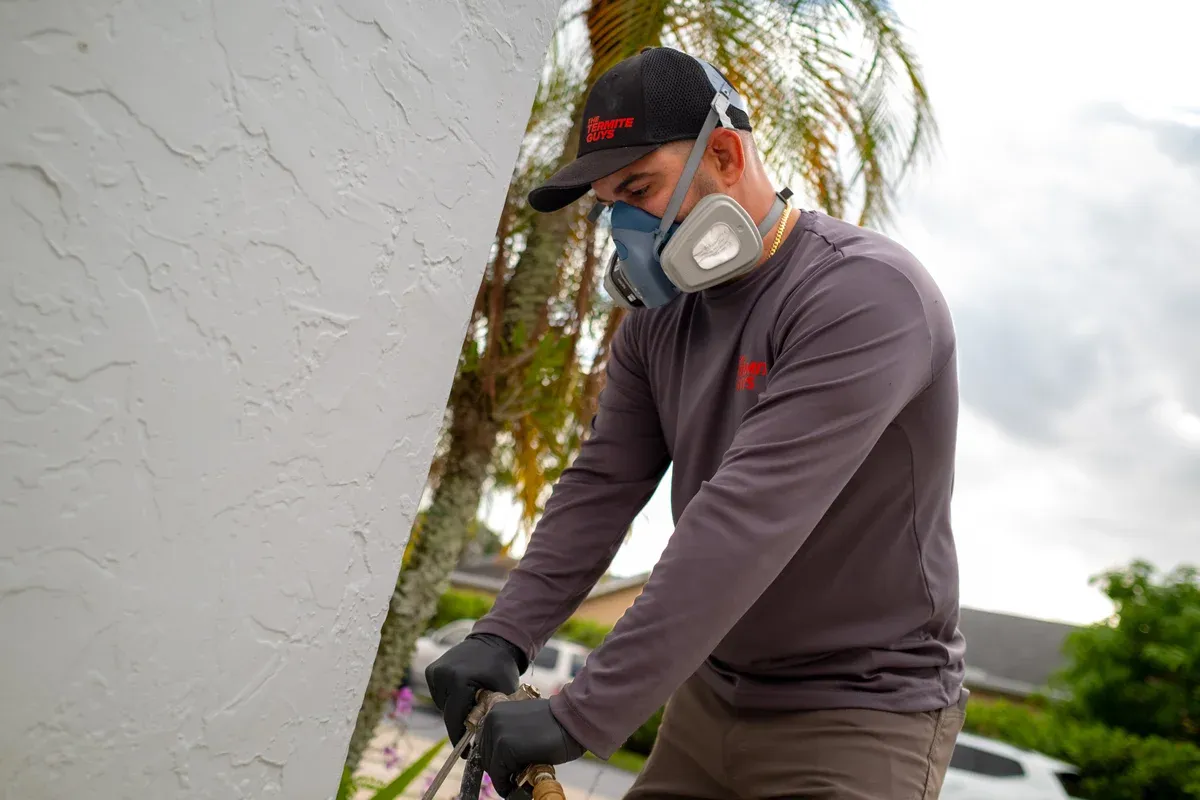
Tentless injection delivers treatment directly into termite galleries without requiring tenting or evacuation.
Method 2: Whole-Structure Fumigation
The gold standard for severe infestations
Fumigation remains the most comprehensive method for eliminating drywood termites. When colonies have spread throughout a structure, it provides the highest certainty of complete elimination.
How It Works
The entire structure is sealed under a tent. Fumigant gas is released inside, penetrating all wood throughout the building. The gas reaches termites wherever they are hiding, regardless of location or accessibility. After adequate exposure time, the tent is removed and the home aerated until gas levels are safe for re-entry.
Best For
- Severe infestations affecting multiple areas
- Colonies in inaccessible locations
- Homes with history of failed targeted treatments
- Situations where missing a colony is unacceptable
- Real estate transactions requiring fumigation documentation
Advantages
- Reaches every termite regardless of location
- Highest certainty of complete elimination
- No need to locate every individual colony
- Provides documented proof of treatment
Limitations
Fumigation requires two to three days of evacuation. All food and medications must be removed or double-bagged. Pets must be boarded. Plants may be damaged. The tent is visible to neighbors. Weather can delay scheduling. Total costs including indirect expenses often exceed targeted treatments.
Method 3: Heat Treatment
Chemical-free option for specific situations
Heat treatment uses elevated temperatures to kill drywood termites. While effective, it has significant practical limitations that restrict its use.
How It Works
Specialized equipment heats the structure or affected areas to temperatures lethal to termites, typically 130 to 140 degrees Fahrenheit. The heat penetrates wood and kills termites through thermal exposure rather than chemical contact.
Advantages
- No chemical residue
- Can treat specific areas rather than entire structure
- Faster than fumigation when treating limited areas
Significant Limitations
Heat treatment has major practical challenges. Electronics, artwork, vinyl, and heat-sensitive items must be removed. Achieving consistent lethal temperatures throughout wood is difficult. Some areas may not reach required temperatures, allowing termites to survive. No residual protection is provided against future infestations.
Most South Florida termite professionals rarely recommend heat treatment due to these limitations. Fumigation or tentless injection typically provide more reliable results with fewer complications.
Comparing Drywood Removal Methods
Quick reference for method selection
Tentless Injection
Best for localized infestations. Stay home during treatment. Lower total cost. Requires finding all colonies. 1-day completion.
Fumigation
Best for widespread infestations. Reaches all termites. Requires 2-3 day evacuation. Higher total cost. Maximum certainty.
Heat Treatment
Chemical-free option. Limited practical applications. Consistency challenges. Rarely recommended in South Florida.
DIY Methods
Consumer products cannot reach drywood colonies inside wood. DIY treatments almost always fail. Professional service required.
Why DIY Methods Fail Against Drywood Termites
Understanding the limitations of consumer products
Hardware stores sell various termite products, but none can effectively eliminate drywood termite colonies. Here is why professional treatment is essential.
Surface Sprays Cannot Reach Colonies
Drywood termites live inside wood, protected from any surface-applied product. Spraying the outside of infested wood kills nothing. The termites continue feeding and reproducing in their protected galleries, completely unaffected by exterior treatments.
Consumer Products Lack Penetration
Even products marketed as penetrating treatments cannot reach deep into wood the way professional injection equipment can. Consumer products also lack the transfer effect technology that allows professional products to spread throughout colonies.
Finding Colonies Requires Expertise
Successful drywood treatment starts with finding all colonies. This requires training, experience, and knowledge of termite behavior. Missing a single colony means the infestation continues growing while you believe the problem is solved.
Choosing the Right Removal Method
A decision framework for your situation
Get Professional Inspection
Have a licensed inspector assess your property. They will identify termite species, map colony locations, and determine infestation extent.
Evaluate Your Constraints
Consider whether you can evacuate for fumigation, whether HOA rules restrict tenting, and your budget including indirect costs.
Compare Recommendations
A reputable inspector will explain which methods suit your situation and why. Be wary of providers who push one method for all situations.
Select Based on Reliability
Choose the method most likely to achieve complete elimination for your specific infestation, even if it is not the most convenient option.
Drywood Termite Removal FAQ
Common questions about removal methods
Get Expert Advice on Drywood Termite Removal
Free inspection determines which method is right for your situation. Honest recommendations backed by 15+ years of experience. Call today.