
Early Detection Saves Thousands in Repair Costs
Termites cause billions of dollars in property damage annually across the United States, with most damage accumulating silently before homeowners notice problems. Unlike water damage or fire that announce themselves dramatically, termite infestations progress hidden inside walls, beneath floors, and within structural timbers. By the time obvious signs appear, colonies may have fed for months or years. Understanding what evidence termites leave helps property owners catch infestations while treatment remains straightforward rather than discovering extensive damage requiring major repairs.
South Florida faces particularly high termite pressure with multiple species causing different types of damage. Subterranean termites leave mud tubes and soil-contact evidence. Drywood termites create tiny pellet piles and kick-out holes. Each species exhibits distinct behavioral patterns requiring different detection methods. Homeowners who know what to look for can spot early warning signs and request professional inspection before minor infestations become structural emergencies.
Most termite damage happens gradually without immediate visible symptoms. Wood hollows from the inside while surfaces remain intact. Structural members weaken silently. Paint bubbles or floors sag only after significant damage accumulates. Regular inspection by trained professionals remains the most reliable detection method, but homeowners should also watch for common termite indicators between scheduled inspections.

$3,000 when caught early
Average Repair Cost
$8,000+ if undetected
Severe Damage Repairs
Months to years
Detection Window
Primary Signs Indicating Termite Activity
Mud Tubes on Foundations
Subterranean termites build pencil-width mud tubes on foundations, walls, or pipes. These shelter highways connect soil colonies to wood food sources above ground.
Frass Pellets Near Wood
Drywood termites push tiny pellet piles through kick-out holes. These accumulations resemble sawdust or coffee grounds and appear below infested wood.
Winged Termites or Discarded Wings
Swarming reproductives emerge from established colonies seeking new sites. Finding winged termites indoors or piles of shed wings near entry points signals active infestation.
Hollow-Sounding Wood
Termites consume wood from inside leaving thin outer shells. Tapping suspect wood produces hollow sounds rather than solid tones indicating internal damage.
Recognizing Subterranean Termite Evidence
Subterranean termites represent the most common and destructive termite type in Florida. These species nest underground and must maintain soil contact for moisture. They construct mud tubes as protected travel corridors between soil and wood food sources. The tubes appear on foundations, inside garages, along plumbing pipes, in crawl spaces, or anywhere termites need to cross non-food materials to reach wood.
Mud tubes typically measure pencil-width to finger-width. They consist of soil particles, wood fragments, and termite saliva cemented together. Fresh tubes appear moist and pliable. Older tubes become brittle and may crack. Sometimes homeowners break tubes hoping this eliminates termites, but colonies simply rebuild new routes or use existing pathways inside walls.
- Foundation walls and pier supports throughout exterior perimeter
- Inside garages along walls, especially in corners and behind storage
- Crawl spaces on floor joists, foundation walls, and support posts
- Around plumbing penetrations where pipes enter buildings
- Behind water heaters and HVAC units against exterior walls
- In attics where chimney structures or vent stacks provide soil-to-roof pathways
Subterranean termites also cause wood damage visible as channels running parallel to wood grain. This creates layered hollowing different from the cross-grain galleries drywood termites excavate.
Characteristic mud tubes built by subterranean termites as protected travel corridors from soil to structure.
Identifying Drywood Termite Indicators
Drywood termites colonize wood directly without requiring soil contact. They enter structures through small cracks or gaps, establish colonies inside wood members, and remain hidden for years. Unlike subterranean species that leave obvious mud tubes, drywood evidence appears more subtle and often goes unnoticed until colonies grow large.
The most characteristic drywood termite sign involves tiny pellet piles accumulating below infested wood. Termites push these fecal pellets out through kick-out holes to keep galleries clean. Pellets have distinctive shape with six concave sides and rounded ends, though individual pellets are too small to see shape without magnification. Colors range from tan to dark brown depending on wood being consumed.
Attic framing and roof rafters frequently harbor drywood colonies. The wood remains undisturbed for years allowing colonies to establish. Window frames and door jambs provide entry points where termites enter through small cracks and infest surrounding wood. Furniture left in storage can develop drywood colonies. Any wood exposed to exterior elements including trim boards, eaves, and decorative woodwork may host drywood termites.
Kick-out holes where pellets emerge measure tiny, approximately 1/16 inch diameter, barely visible without close inspection. Homeowners often discover pellet piles on windowsills, floors beneath ceiling beams, or shelves under rafters before noticing the actual holes. Regular vacuuming may remove evidence, so pellets reappearing after cleaning indicates active infestation.
How to Check Your Property for Termites
Exterior Perimeter Inspection
Walk around your entire foundation looking for mud tubes on walls or visible wood damage. Check where landscaping, mulch, or soil contacts wood siding or trim. Look for blistered paint or wood that appears water-damaged but isn't near moisture sources.
Interior Visual Examination
Inspect window frames, door jambs, and baseboards for tiny holes or pellet piles. Check closets, storage areas, and spaces under stairs where termites may work undisturbed. Look for paint bubbling or wallboard appearing damaged without obvious water source.
Attic and Garage Assessment
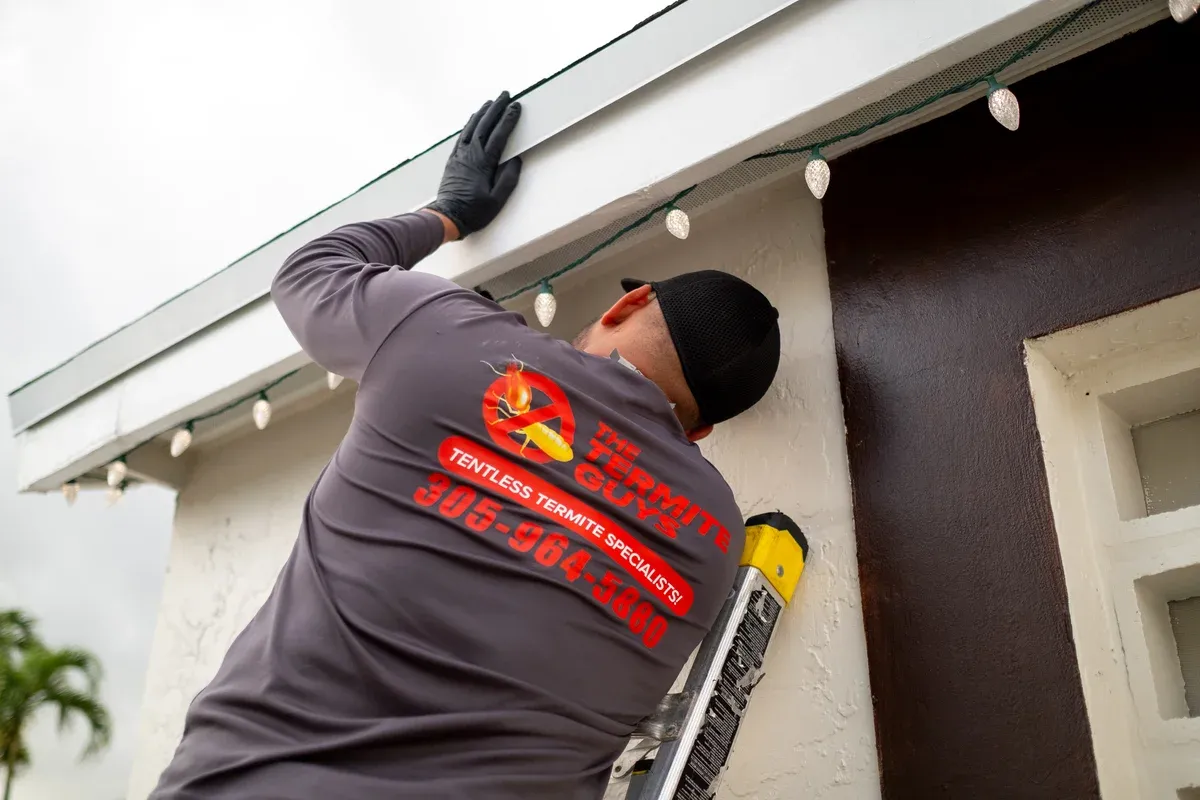
Examine attic framing for pellet piles below beams or rafters. In garages, check corners, behind stored items, and along foundation walls for mud tubes. Look for damaged wood that sounds hollow when tapped with a screwdriver handle.
Moisture and Conducive Condition Check
Identify areas with water damage, poor drainage, or excessive humidity as these attract termites. Note wood-to-soil contact points, cracks in foundation or slabs, and gaps around utility penetrations that provide termite entry.
Secondary Signs of Possible Termite Activity
Bubbling or Peeling Paint
Paint blistering on wood surfaces not near moisture sources may indicate termites or moisture they've introduced. Check underlying wood condition.
Squeaky or Sagging Floors
Floors that suddenly squeak or sag without explanation might have termite-damaged support joists. Professional inspection confirms cause.
Sticking Doors or Windows
Doors and windows becoming difficult to open may result from termite damage creating moisture problems or structural settling from weakened framing.
Cracks in Walls or Ceilings
New cracks appearing without obvious cause sometimes indicate structural movement from termite-weakened supports requiring investigation.
Understanding Termite Swarmers and What They Mean
Swarming marks a colony's reproductive phase when winged termites emerge seeking locations to establish new colonies. This typically indicates the parent colony has matured, often taking three to five years. Finding swarmers indoors almost always confirms termites already infesting the structure rather than just passing through from external sources.
Swarmers emerge when conditions favor reproduction, influenced by temperature, humidity, and season. In Florida, different termite species swarm during different periods, meaning swarming activity can occur any time of year depending on species. Subterranean termites often swarm in spring. Drywood species may swarm spring through fall. Formosan subterranean termites swarm on warm evenings typically May through July.
Termite swarmers resemble flying ants but have distinct differences. Termites have straight antennae, thick waists, and equal-length wings. Ants have elbowed antennae, pinched waists, and front wings longer than rear wings. Termite swarmers appear attracted to light and may gather near windows or light fixtures. After swarming, they shed wings creating piles of discarded wings near entry points or on windowsills.
Finding even a few discarded termite wings indoors warrants immediate professional inspection. This evidence indicates established colonies possibly causing ongoing damage.
Homeowners sometimes mistake termite swarmers for ant swarms and delay action. When uncertain, collect specimens in a sealed container and contact pest control professionals for identification. Prompt professional inspection following swarm sightings allows treatment before colonies expand and damage increases.
Characteristic drywood termite frass pellets accumulating below kick-out hole indicate active colony feeding above.
Why Professional Inspection Detects What Homeowners Miss
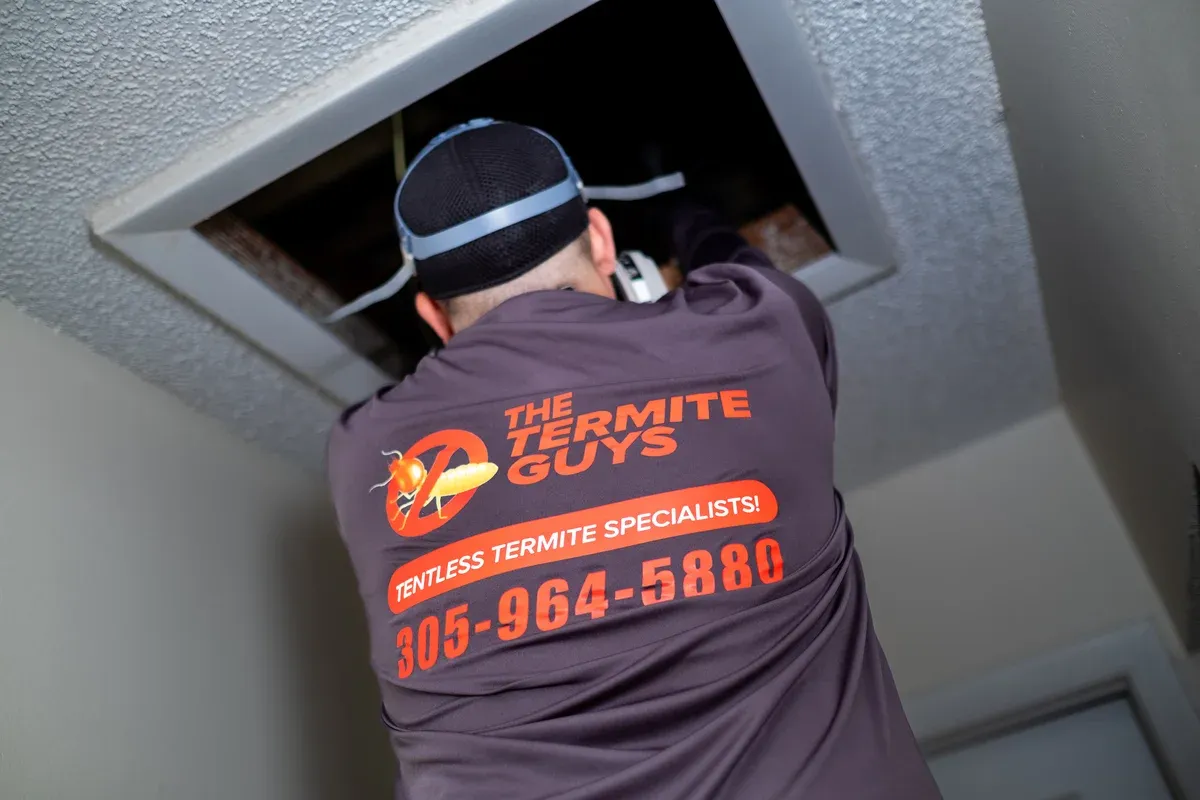
Even vigilant homeowners miss termite evidence without training and experience. Termites hide in wall voids, beneath flooring, inside ceilings, and other inaccessible areas. Professionals use moisture meters detecting elevated readings suggesting conducive conditions or hidden activity. They recognize subtle evidence like mud tube fragments in cracks, early-stage frass deposits, or damaged wood patterns specific to termite feeding.
Inspectors know where different termite species typically colonize based on local building practices and environmental factors. They check areas homeowners overlook like crawl space corners, attic eave connections, garage foundation transitions, and exterior trim details. Professional inspection equipment includes mirrors for viewing tight spaces, probes for testing wood integrity, and flashlights for examining dark areas.
Florida's high termite pressure makes annual professional inspection essential regardless of visible evidence. Colonies establish and feed silently for extended periods before producing obvious signs. By the time homeowners notice damage, repairs often cost significantly more than early detection and treatment would have. Regular inspection catches problems during early stages when treatment remains simple and affordable.
Worried You Might Have Termites?
Professional inspection provides definitive answers and peace of mind. Same-day service available throughout South Florida.
How Customers Discovered Their Termite Problems
Found small piles of what looked like sawdust appearing repeatedly on our windowsill. Googled it and realized might be termites. Called for inspection and they confirmed drywood termites in the attic. Caught it before major damage occurred.
Karen S.
Verified Customer
Noticed mud tubes on our garage wall that weren't there before. Inspector found extensive subterranean termite activity. Treatment stopped the infestation. Glad we didn't ignore those tubes.
James T.
Verified Customer
Our door frame started feeling soft when painting. Inspector found hidden termite damage inside the jamb. They treated it and repaired the frame. Could have been much worse if we'd waited.
Michelle R.
Verified Customer
Common Questions About Detecting Termites
Don't Wait for Obvious Damage to Appear
Ready to protect your home from termites? Contact us for a free inspection.