What Every Homeowner Should Know About Termites
The Basics of Termite Biology and Behavior
Termites are social insects that live in organized colonies with distinct castes including workers, soldiers, and reproductives. These colonies can range from a few thousand individuals in young drywood colonies to millions in mature subterranean supercolonies. Unlike ants, which they superficially resemble, termites feed on cellulose found in wood and plant material.
In South Florida, termites remain active throughout the entire year. Our subtropical climate provides the warmth and moisture these insects need to thrive. Properties across Miami-Dade, Broward, and surrounding counties face consistent termite pressure regardless of season, though swarming activity tends to peak during spring and early summer.
Understanding termites is the first step toward protecting your home. This guide covers the fundamental aspects of termite biology, the different species found in Florida, how termites establish and grow colonies, and the control methods professionals use to eliminate infestations.
3
Major Species in FL
365
Days Active/Year
$5B+
US Damage Annually
Termite Colony Structure
Understanding how termite societies function
Termites live in highly organized colonies where each individual plays a specific role. This social structure makes them efficient at consuming wood and difficult to eliminate without professional treatment.
The Queen and King
Every termite colony begins with a mated pair called the king and queen. The queen is the primary egg producer, capable of laying thousands of eggs daily in mature colonies. She can live for decades, continuously producing offspring throughout her lifespan. The king remains with the queen, fertilizing eggs as needed. In some species, secondary reproductives develop to supplement egg production.
Worker Termites
Workers comprise the majority of a termite colony. These pale, soft bodied insects are responsible for all the labor: foraging for food, feeding other colony members, constructing and maintaining tunnels, and caring for eggs and young termites. Workers are the caste that actually consumes wood and causes structural damage. They are blind and work continuously, never resting.
Soldier Termites
Soldiers defend the colony against predators, primarily ants. They have enlarged heads with powerful mandibles or chemical defense mechanisms depending on species. Soldiers cannot feed themselves and rely on workers for nourishment. Their sole purpose is colony protection.
Swarmers (Alates)
Swarmers are winged reproductives that leave established colonies to mate and found new colonies. Swarming typically occurs in warm, humid conditions, often after rain. Seeing swarmers inside your home strongly indicates an active infestation. After mating, swarmers shed their wings and become the king and queen of a new colony.
Major Termite Species in Florida
Three types dominate our region
Drywood Termites
Live entirely within wood without soil contact. Common in attics, furniture, and structural wood. Create small fecal pellets called frass. Colonies are smaller but can have multiple infestations in one structure.
Subterranean Termites
Live in soil and build mud tubes to access wood above ground. Require moisture and maintain contact with ground. Form the largest colonies and cause the most widespread damage in Florida.
Formosan Termites
An aggressive subterranean species sometimes called super termites. Build massive colonies with millions of individuals. Can establish above ground nests if moisture is available. Extremely destructive.
The Termite Life Cycle
From egg to mature colony
Egg Stage
The queen lays eggs that hatch into nymphs. Egg production increases as the colony matures, with established queens laying thousands daily.
Nymph Development
Nymphs molt several times, developing into workers, soldiers, or reproductives based on colony needs and pheromone signals.
Caste Maturity
Workers begin foraging and feeding the colony. Soldiers take up defensive positions. The colony grows steadily over years.
Colony Reproduction
Mature colonies produce swarmers that leave to establish new colonies. A single property can develop multiple satellite infestations.
How Termites Damage Homes
Termites consume cellulose, the primary component of wood. Their feeding patterns and the type of damage they cause vary by species.
Drywood Termite Damage
Drywood termites excavate galleries within wood, eating across the grain. They leave a thin outer shell that can appear normal while the interior is hollowed. Infestations often go unnoticed until significant damage occurs. Kick out holes where frass is expelled and hollow sounding wood are common indicators.
Subterranean Termite Damage
Subterranean termites eat along the wood grain, creating a layered honeycomb pattern. They require moisture and bring soil into their galleries. Mud tubes on foundations and walls indicate their presence. Damage often begins at ground level and works upward through the structure.
Rate of Destruction
A mature subterranean colony can consume several pounds of wood per year. Formosan colonies, being larger, cause damage faster. Drywood colonies are smaller and work more slowly, but multiple colonies in one structure accelerate total damage. Early detection significantly limits repair costs.
Think You Might Have Termites?
Do not wait for visible damage. Professional inspections detect termite activity before it becomes a major problem.
Professional Termite Control Methods
How experts eliminate colonies
Tentless Treatment
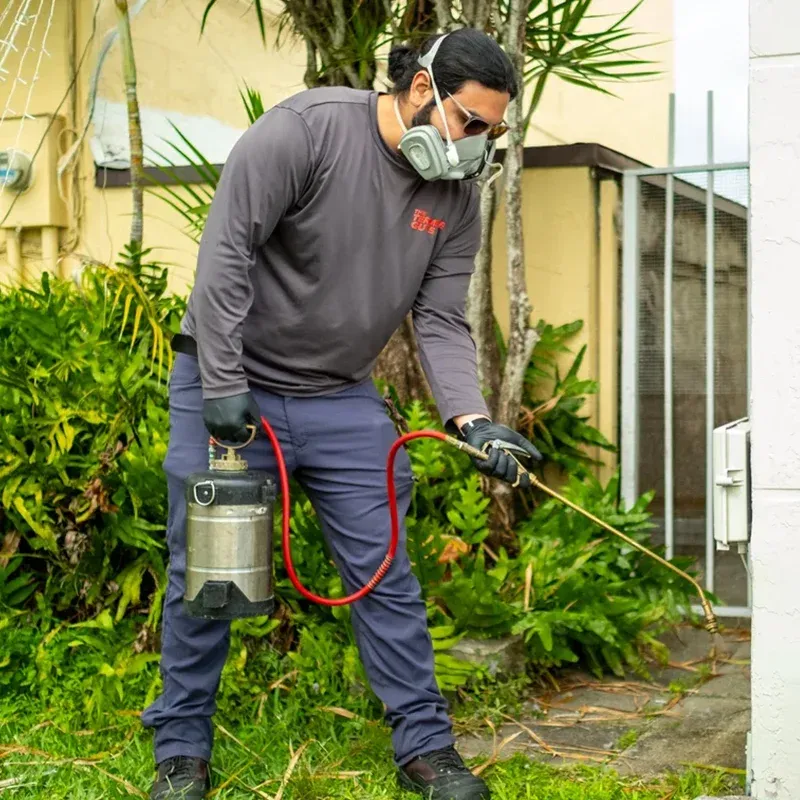
Specialized products injected directly into infested wood. Effective for drywood termites without evacuation or food removal. Florida Termite Guys specializes in this approach.
Fumigation
Whole structure treatment under a tent using sulfuryl fluoride gas. Required for severe, widespread drywood infestations. Requires evacuation for 2-3 days.
Soil Treatment
Liquid termiticides applied to soil around foundations. Creates a barrier against subterranean termites. Effective for both prevention and treatment.
Bait Systems
Stations placed around the property that termites feed on and carry back to the colony. Eliminates entire colonies including the queen over time.
Preventing Termite Infestations
While no method guarantees complete prevention, these practices significantly reduce termite risk.
- Eliminate wood to soil contact around your foundation
- Fix plumbing leaks and drainage issues promptly
- Ensure proper ventilation in crawl spaces and attics
- Store firewood and lumber away from the house
- Keep mulch at least 12 inches from foundation walls
- Seal cracks and gaps in your foundation
- Schedule annual professional termite inspections
- Consider preventative treatment for high risk properties
In South Florida, prevention is particularly important because termite pressure is constant. Properties that have had previous infestations are at higher risk for reinfestations. Preventative treatments create chemical barriers that stop termites before they reach your home.
Termite Questions Answered
Expert answers to common concerns
Protect Your Home from Termites
Florida Termite Guys has protected South Florida homes for over 15 years. Schedule a free inspection to understand your termite risk and learn about protection options.